
MLB Expansion in Mexico City: How Much Deeper Would the Fences Have To Be?
MLB Commissioner Rob Manfred told CSN Chicago on Thursday that both Montreal and Mexico City are in the sights of the league for potential expansion to 32 teams. Montreal would bring a team back to the city after they moved south in 2004. Mexico City, on the other hand, would be completely new and fascinating for a number of reasons.
First, it would be the first whole-hearted venture of a major professional sports league in any Latin American country. The NFL has played a regular season game in Mexico City, and the NBA has played three regular season games there. But the closest any league has come was MLB themselves when they sent the Montreal Expos to San Juan[note]I realize Puerto Rico isn't a separate country than the US[/note] for 22 games in their final two seasons in Montreal. An expansion team in Mexico City would be almost four times as many games as any league has ever tried to play outside of its "home" market.
While interesting, that's not nearly as unique as the fact that Mexico City sits at an elevation of 7,380 feet. That's a whopping 2,180 feet higher than Coors Field, a long dreaded destination for pitchers. This is even despite the fact that a humidor was installed in 2002 and has since reduced home runs to more typical levels. Coors Field, as compared to its peers, has fences around 15 feet longer than the average in all dimensions to offset the altitude difference. A new MLB stadium in Mexico City would have to have much deeper fences.
SCIENCE TIME!
(Editor note: If you're a scientist and take exception to any of the math below, please contact us so that we can offer a better resource!)
According to Wunderground, Mexico City's average sea-level pressure, one of the key indicators of air density that is adjusted to an elevation of 0 feet/meters above Mean Sea Level, is 1022 hPa (30.17 inches of mercury), and the average temperature is 18 degrees C, about 64 degrees F. By throwing these numbers together, we see that the density altitude of Mexico City on average is around 9,000 feet.
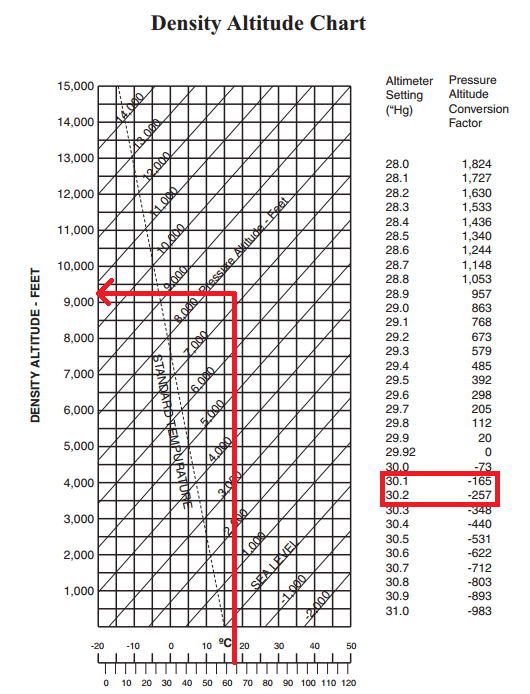 Presumably, a humidor similar to the one in Coors Field would be installed to remove the effect of humidity upon the equation, and we can assume that the 9100 foot or so density altitude is a representative value. Using the 9100 feet value we found above, we're able to determine that the air is nearly 25% thinner than at Sea Level. As a comparison, the air at Coors Field is 18% thinner.
What does this mean? Extrapolating the data from University of Illinois Physics Professor Emeritus (and apparently a big baseball fan), Alan Nathan's analysis of Coors Field, it means a lot.
Presumably, a humidor similar to the one in Coors Field would be installed to remove the effect of humidity upon the equation, and we can assume that the 9100 foot or so density altitude is a representative value. Using the 9100 feet value we found above, we're able to determine that the air is nearly 25% thinner than at Sea Level. As a comparison, the air at Coors Field is 18% thinner.
What does this mean? Extrapolating the data from University of Illinois Physics Professor Emeritus (and apparently a big baseball fan), Alan Nathan's analysis of Coors Field, it means a lot.
Presumably, a humidor similar to the one in Coors Field would be installed to remove the effect of humidity upon the equation, and we can assume that the 9100 foot or so density altitude is a representative value. Using the 9100 feet value we found above, we're able to determine that the air is nearly 25% thinner than at Sea Level. As a comparison, the air at Coors Field is 18% thinner.
What does this mean? Extrapolating the data from University of Illinois Physics Professor Emeritus (and apparently a big baseball fan), Alan Nathan's analysis of Coors Field, it means a lot.
- Due to thinner air, resistance slowing down pitches will lead to pitches being approximately 1.5 MPH faster than the same pitch at sea level. This shouldn't affect too much.
- However, pitches will break only 75% as much as they would at sea level. That nasty 18 inch break on an offspeed pitch is now only about a 13 inch break. Junk ball pitchers beware!
- A batted ball in Coors Field, according to Nathan, travels about 5% farther. This is close to what could be surmised from the dimensional differences of around 15 feet, though center field should really be about 20 feet back. Extrapolating this with the data we've calculated above about the air being 25% thinner in place of 18% in Denver, we can expect a value of nearly 7% additional flying distance for a batted ball.